


Best LinkedIn Recruiter Alternatives in 2026: A Country-by-Country Guide for Recruitment Agencies

Blogs
Best LinkedIn Recruiter Alternatives in 2026: A Country-by-Country Guide for Recruitment Agencies
I. The LinkedIn Recruiter Trap
I was finishing an overpriced espresso last week when a CEO of a recruitment and staffing agency told me something that made me put the cup down.
"We’re paying for a Rolls-Royce, but we’re stuck in 5:00 PM traffic on the M1."
He was talking about his LinkedIn Recruiter bill. And he isn't alone. In 2026, the Blue Giant became a victim of its own success. What used to be a recruiter's secret weapon is now a cluttered, expensive, and increasingly quiet room.
Here is why the math on your $10k seat doesn't add up anymore.
1. The "Hidden Tax" of 2026
Let’s look at the numbers. A single LinkedIn Recruiter Corporate seat now commands an annual commitment of $10,800 to $12,960.
But that’s just the cover charge. To actually move in 2026, you’re hitting below-the-line costs that bloat your TCO (Total Cost of Ownership) by another 30%. Running out of InMails? That’ll be
$10 per credit. Want to boost a job post, so it isn't buried under 2,000 AI-generated applications? Budget an extra $300 to $1,100 per month. Although, LinkedIn does include 1 job board per user seat, we all know that’s not nearly enough.
When your all-in cost per recruiter nears $24,000 annually, you have to ask: Is this tool delivering 50% of my agency's total value? For most, the answer is a resounding no.
2. The Response Crisis
Current 2026 benchmarks show average InMail response rates have cratered to a measly 15% and the best agencies get 21%. In high-demand sectors like Software Engineering, that number often dips below 10%
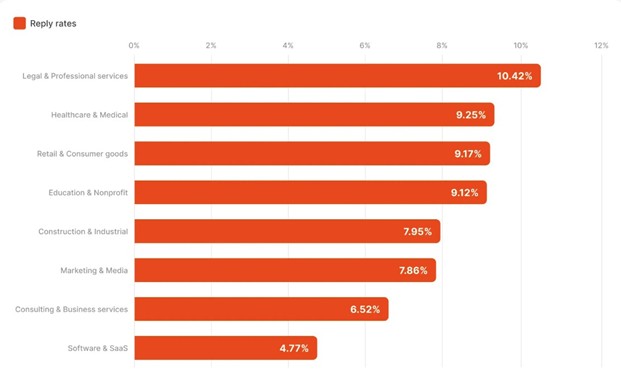
Think about that. You are paying $10 for a message that has an 80% chance of being ignored. Candidates are suffering from Inbox Fatigue. In an era where 66% of job seekers say the hiring process feels increasingly impersonal, a generic InMail is no longer outreach, it’s digital noise. If your team is still spraying and praying into LinkedIn inboxes, you aren't recruiting; you're donating to LinkedIn's bottom line.
3. The Walled Garden Problem
The most dangerous assumption in recruitment is that everyone is on LinkedIn. They aren't. Not anymore.
Recent data reveals a quiet unease among top-tier talent. While LinkedIn boasts 1.3 billion members, monthly active users (MAU) tell a different story. The Hidden Gems, the passive candidates who actually move the needle, are retreating.
● Developers are living on GitHub and niche Discord servers.
● Creatives are on Behance and Dribbble.
● Gen Z is moving toward social media platforms like Tiktok and Instagram for career advice and job hunting.
By staying inside the LinkedIn Walled Garden, you are fishing in a pond where the fish have learned to ignore the bait. 65% of candidates now say finding a job is more challenging because of the sheer volume of competition on the platform. To find the talent that actually closes deals, you have to look where your competitors aren't willing to go.
II. The 2026 Cost Comparison: Recruitervs. The Field
Tounderstand the 2026 talent market, you have to stop looking at LinkedIn as atool and start looking at it as a luxury subscription with a diminishing ROI. When you compare the Blue Giant to a modern, multichannel stack,the numbers don’t just suggest a change, they demand one.
1. License Breakdown: The Pricing Mirage
Most agencieswalk into the LinkedIn ecosystemthrough the Recruiter Lite door, lured by the
~$170/month price tag ($1,440/year). But Lite is a cage.With only 30 InMail creditsper month, you’re limited toroughly one outreach per business day. . Worse, you are blind to "Open toWork" signals, locked out of advanced filters, and restricted to your own3rd-degree network, leaving a vast portion of the talent market invisible.
The moment you scale, you’re pushed toward Recruiter Corporate. In 2026, a single seat commands an annual commitment of $10,800 to $12,960 (approximately $1,080/month). For a boutique agency with five recruiters, that is a $64,800 annual line item (without boosting and Inmail overages) before you’ve even made your first hire.
In 2026, relying on LinkedIn Recruiter’s walled garden has become a high-friction manual chore that caps agency productivity. In contrast, modern AI-native platforms are delivering 10x by reducing time-to-hire by up to 63%.
Agencies stuck in a 2015 loop of manual keyword matching and InMail spam face cratering response rates. Meanwhile, forward-thinking platforms like Wiggli Intelligence deploy AI to give you more signals that enhance a recruiter's productivity. This shift allows recruiters to transcend the coding wall of Boolean strings, give them ‘open-to-work’ signals, and deliver real-time updated contact details of hiring managers. Recruiters can now focus their human energy solely on strategic relationship-building to close high-value deals
2. The TCO & Savings Matrix: What’s Your Margin?
The license is just the cover charge. The true drain on your margins, the Total Cost of Ownership (TCO), comes from the hidden fees and systemic inefficiencies of a closed network.
The Tax on Inefficiency
The 2026 Hidden Tax is found in the overage. If your team launches a single search for a
high-demand Software Engineer and needs to reach 50 qualified candidates, a Lite subscriber is already 20 InMails over their monthly limit. That's an immediate $200 penalty on a single search.
Even at the Corporate tier, reaching 100 extra candidates, a common necessity when response rates average only 18-25%, will cost you a staggering $1,000 in additional credits. For most agencies, these costs don't scale; they simply erode the placement fee.
In the 2026 revenue landscape, activity is not productivity. If your team is spending a significant portion of their budget on a platform where roughly 80% of outreach goes unanswered, a platform that users are now using like Tiktok or Instagram just scrolling to see updates, you aren't just overpaying, you're subsidizing your own stagnation.
Wiggli Intelligence: The 10x Advantage for Modern Agencies
While LinkedInremains a static walled garden,Wiggli Intelligence serves as an active,
AI-native orchestration layer that transforms how a recruitment and staffing agencyoperates. By centralizingover 900 million profiles withreal-time updated contact data, Wiggli allows recruiters to bypass the InMaillottery entirely. Instead of manual keyword matching, your team uses semantic AI scoring to instantly rankthe best-fit candidates, a shift that typically slashes screening time by 70% and enables a 10x organizationwhere every recruiter handles triple the mandate capacity.
The true differentiator, however,is Cross-Platform Intent. Unlike LinkedIn, which only identifiescandidates who manually toggle their status, Wiggli tracks live talent movementand behavioral signals across the entire web, from GitHub commits to refreshed portfolios on Behance. This provides a first-mover advantage, allowing youragency to reach high-value Hidden Gems via verified personal channels beforethey even appear on your competitors' radars. By automating the administrativeburden of sourcing and outreach, Wiggli ensures your recruiters spend theirhours on what actually closes deals: high-valuehuman relationship building.
Top LinkedIn RecruiterAlternatives in the UK for Agencies
In the UK, your reputation is built on speed-to-lead. If you're waiting 48 hours for an InMail responsethat has an 80% chance of never coming,you’ve already lost the candidate to a swiftercompetitor. The Hidden Tax in Britain isn't just the license fee; it's the opportunity cost of not having a candidate's direct mobile number when arole opens up.
The UK Shift: Intent over Volume
For years, Reed and LinkedIn were the default UK duo. But in 2026, the best talent in London and the Northern Powerhouse has retreated to platforms that filter for quality. Otta (now Welcome to the Jungle) remains a visible brand for employer branding, but it is no longer the sole gatekeeper for high-growth tech talent as its matching model struggles to keep pace with the hyper-selective 2026 hiring reality. For agencies, Cord can feel like a "walled garden within a walled garden." Because the platform prioritizes transparency and direct-to-founder messaging, agencies often find themselves fighting against the platform's own UX to keep their client’s identity confidential. This makes it nearly impossible to spec in talent or protect a high-value mandate.
However, the real trump card for UK agencies today is Wiggli Intelligence. While Otta and Cord give you access to a specific pool, Wiggli provides the Direct Data Layer needed for both sourcing and Business Development. It doesn't just find a developer; it extracts the verified mobile number and personal email while simultaneously identifying the hiring manager at a competing firm, allowing you to spec-in talent with a single workflow.
Top LinkedIn Recruiter Alternatives in France for Agencies
Mastering the "Cadre" Market & Right to Disconnect
In France, recruitment is a high-finesse game where aggressive InMail spam doesn't just fail, it can damage your brand. To succeed, agencies must respect the cultural and legal Right to Disconnect (Droit à la déconnexion), meaning timing and channel choice are everything. Success in Paris or Lyon requires a tool that understands the legal why as much as the technical how.
Welcome to the Jungle has solidified its position as the mandatory platform for employer branding and the high-value Cadre (executive) market. It serves as a visual and immersive gatekeeper for the modern French workforce, hosting over 2 million active candidates looking for more than just a job description.But, due to the current economic situation, companies are not extending their contracts because for them it is not a necessity. For direct outreach,
French-founded tools like Kaspr have historically led the market, though recent 2024/2025 regulatory scrutiny from the CNIL (French Data Protection Authority) has forced a shift toward more transparent, GDPR-first sourcing methods. Another reason recruitment and staffing agencies are moving away from these platforms is because they are more suited for end clients. Agencies have a completely different set of needs that these legacy platforms have not been able to address.
Wiggli Intelligence provides the tactical advantage by combining this French-specific nuance with a global reach. It allows you to source Cadre talent with precision while identifying hiring managers at major French firms, enabling a seamless Business Development workflow that respects local privacy expectations.
Top LinkedIn Recruiter Alternatives in Germany/DACH for Agencies
Mastering the Direct Search in a High-Compliance Market
Navigating the German (DACH) region requires a strategic pivot from high-volume InMail blasts to surgical, localized engagement. In 2026, the battle between XING and LinkedIn has reached a tipping point, but for recruiters, XING remains a mandatory pillar. While LinkedIn dominates international and high-tech sectors, XING still holds over 21 million users and is the primary hub for Germany’s powerful Mittelstand (SMEs) and traditional engineering sectors. However, recruiters must navigate two significant platform-specific risks:
● The Shadow User Problem: While XING boasts 21 million members, its actual engagement is significantly lower than its rival. Recent surveys show that while LinkedIn sees 12% regular active users, XING has dropped to just 5%.
● Database Stagnation: XING profiles are frequently characterized as passive. For recruiters, this means the profile you are viewing is often stale or outdated, with no public metric available to confirm the actual profile count of active, up-to-date professionals versus dormant accounts.
Agencies relying on XING’s often-dormant profiles find themselves in a productivity deadlock: they can't get a response via the platform's inbox, but they can't legally pick up the phone to follow up. The real nuance, however, lies in the UWG (Unfair Competition Act) and strict GDPR interpretations. In Germany, you cannot legally cold call a candidate's personal mobile without prior explicit consent, doing so exposes your agency to significant legal cease and desist risks.
Wiggli Intelligence acts as the ultimate bridge in this complex landscape. It provides access to both the global talent of LinkedIn and the localized depth of XING, while its data enrichment layer prioritizes verified business contacts to keep your outreach within the safe zones of German law while maintaining the speed your end clients demand.
Top LinkedIn Recruiter Alternatives in Netherlands for Agencies
Mastering the Randstad Goldmine - Beyond Generalist Sourcing
In the Netherlands, recruitment is defined by the high-density Randstad region (Amsterdam, Rotterdam, Utrecht, and The Hague), which remains the epicenter for IT, finance, and engineering talent. While LinkedIn is deeply saturated here, the most successful Dutch agencies leverage a more localized matchmaking approach to tap into the next generation of professionals.
Magnet.me has established itself as the mandatory platform for the graduate and young professional ecosystem (ages 18–32), with over 450,000 active users and 6,000 employers. However, for agencies, Magnet.me presents a tactical "Direct Bias" similar to Cord in the UK. Its "Tinder for jobs" AI-swipe model is optimized for direct company culture matching, which often marginalizes the agency's role as a strategic intermediary. For an agency recruiter, relying solely on Magnet.me means competing in a space where the platform’s UX encourages candidates to bypass recruitment and staffing agencies in favor of direct-to-brand applications.
Furthermore, the Dutch market in 2026 is under heavy regulatory pressure from Wet VBAR (targeting false self-employment) and new pay parity rules for agency workers. To remain compliant, top-tier agencies are moving away from one-off transactional hires toward building GDPR-proof talent communities. Wiggli Intelligence complements this by providing the Direct Data Layer to reach these young professionals via verified personal channels, while identifying the hiring managers at the 5,000+ companies already active in the Randstad ecosystem.
Top LinkedIn Recruiter Alternatives in the USA for Agencies
United States of America (USA): Mastering Speed-to-Lead in a High-Velocity Market
In the United States, recruitment in 2026 is defined by a single metric: the race to the inbox. With 69% of organizations struggling to fill full-time roles, the American market has become a high-volume, high-velocity environment where the best candidates are off the market in days. For agencies, success is no longer just about sourcing, it is about speed-to-lead.
To maintain this pace, US recruiters are moving away from legacy platforms like Monster and CareerBuilder. Following their June 2025 Chapter 11 bankruptcy filing and subsequent asset sell-off, these former giants are now widely viewed as delivering "stale" databases with lower applicant quality compared to modern engines.. While Indeed remains a titan for active job seeker volume due to its massive reach and pay-per-click flexibility, it lacks the professional networking and passive-talent depth that the modern US agency requires.
The defining nuance of the US market is the normalization of direct data enrichment. Unlike the restricted European landscape, US agencies operate on a direct-is-best model. Leveraging platforms like Apollo or ZoomInfo to find verified personal emails and mobile numbers has become a standard requirement to bypass the InMail noise. In reality, the best talent is found on the Open Web, and the best recruiters are using Wiggli Intelligence to find them, verify them, and spec them into decision-makers in seconds.
Wiggli Intelligence thrives here by acting as a unified orchestration layer. It doesn't just aggregate 900M+ global profiles; it enriches them with real-time verified contacts—connecting you directly to both the candidate and their future hiring manager in a single, automated workflow.
Conclusion: The End of the "Blue Giant" Monopoly
The LinkedIn Recruiter Trap of 2026 is a warning to every agency that relies on a single, expensive walled garden. As InMail response rates crater and the total cost of ownership nears
$25,000 per seat, the math on the Blue Giant simply no longer adds up for the modern firm. Success now belongs to those who fish outside the walls, leveraging AI-native tools like Wiggli Intelligence to find the Hidden Gems where they actually live, on GitHub, niche Discords, and localized platforms. By mastering direct data and territory-specific nuance, you stop donating to LinkedIn's bottom line and start reinvesting in your own.
Partager cet article